Gabriel Kuma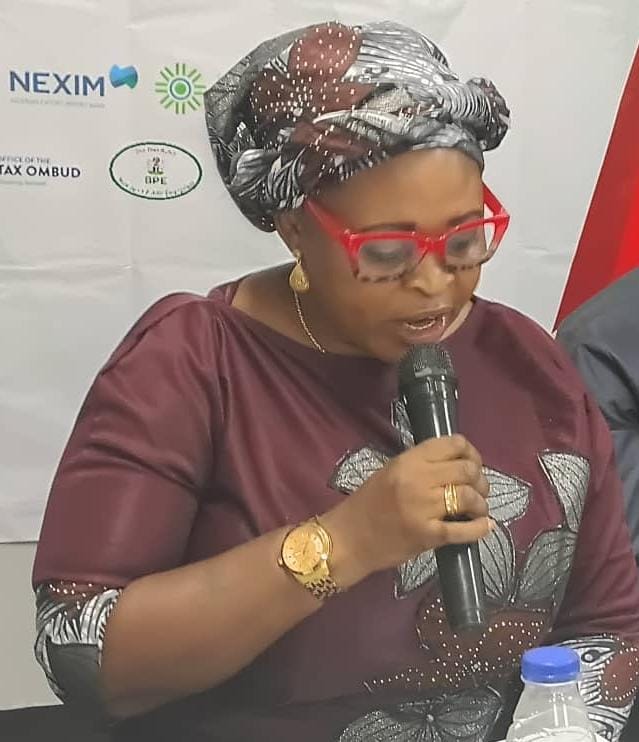
The Federal Government has said the synergy between its fiscal and monetary policies is set to unveil a nine-pillar implementation framework designed to deliver non-inflationary growth above 7 per cent by 2027.
Describing the roadmap as
Disinflation and Growth Acceleration Strategy, which we call DGAS, the Minister of State for Finance, Dr. Doris Uzoka-Anite, who was represented at the 2025 Financial Correspondents Association of Nigeria (FICAN) Annual General Meeting (AGM), on Wednesday in Abuja by the Assistant Director of Media and Public Relations, Uloma Amadi, stated that the President Bola Ahmed Tinubu administration is set to achieve the “ambitious targets that move nations.”
Uzoka-Anite stated that, “the second wave, which is now underway, is designed to unlock productive capacity. In collaboration with the Central Bank of Nigeria, the Ministry of Finance has co-authored the Disinflation and Growth Acceleration Strategy, which we call DGAS.
“This is not a policy document that sits on a shelf. It is a nine-pillar implementation framework designed to deliver non-inflationary growth above 7 percent by 2027.
“The pillars are concrete: capital mobilization through development finance instruments; sectoral acceleration in agriculture, energy, technology, manufacturing, and creative industries; a nationwide energy expansion program covering oil, gas, solar, hydro, and emerging fuels; digital infrastructure including broadband, AI-ready data centres, and automation.
Others include, “a human capital pipeline targeting over 10 million young Nigerians annually in technical and vocational programs; and an expanded Consumer Credit Platform that puts structured financing within reach of ordinary citizens for housing, education, healthcare, and goods”.
The minister said to achieve this, Nigeria must adopt the Dangote-model of refining raw materials in the country instead of leaving the control of the long-run cost structure to other nations.
“Nigeria currently imports approximately 70 percent of the raw materials used to produce industrial goods. That means we are not controlling the long-run cost structure of our own economy.
“The Dangote Refinery showed what is possible when we process our own resources here rather than exporting raw inputs and buying back the finished product at a premium. Our goal under DGAS is to replicate that model across agriculture, mining, health, and manufacturing. When we do, the resulting job creation, tax revenues, and household wealth transfers will be of a different order of magnitude”, she stated.
She further applauded Nigeria’s removal from the FATF grey list saying, “the removal has strengthened our anti-money laundering and counter-terrorism financing frameworks to global standards. This matters because it directly reduces the compliance costs foreign investors face when engaging with Nigerian institutions. Capital flows more freely to countries that international regulators trust”.
According to the Minister, efforts are in top gear to establish zero duties on 90 per cent of goods traded within the continent.
She stated, “we have also submitted Nigeria’s ECOWAS Tariff Offer to the AfCFTA Secretariat, establishing zero duties on 90 percent of goods traded within the continent. A binding commitment to a market of 1.4 billion people with a combined GDP of over $3 trillion is not a gesture. It is a strategic repositioning.
“When global trade routes become contested, as they are today, regional corridors become the most reliable alternatives. Nigeria is deliberately placing itself at the center of that alternative”.
Meanwhile the FICAN AGM is with the theme, “Actualizing President Bola Ahmed Tinubu’s $1 Trillion Economy Agenda”.